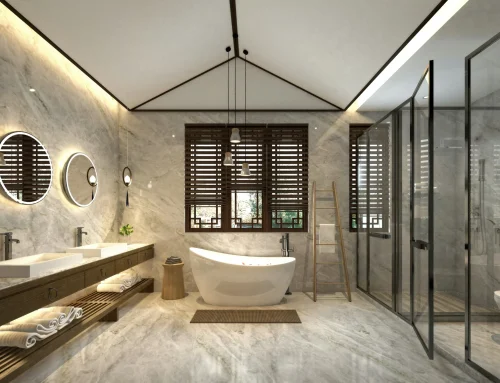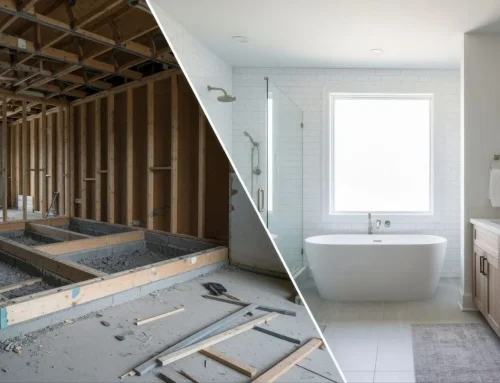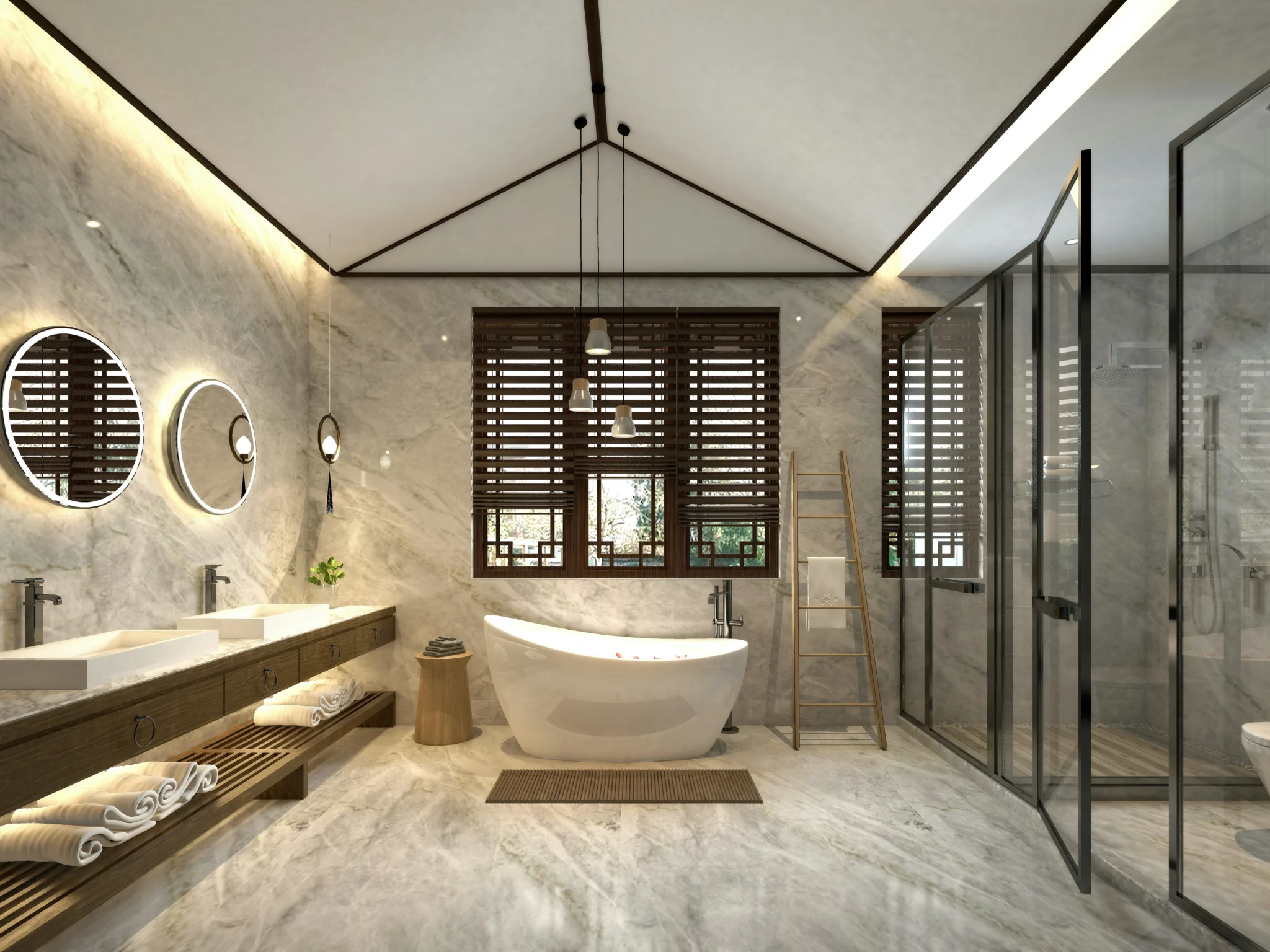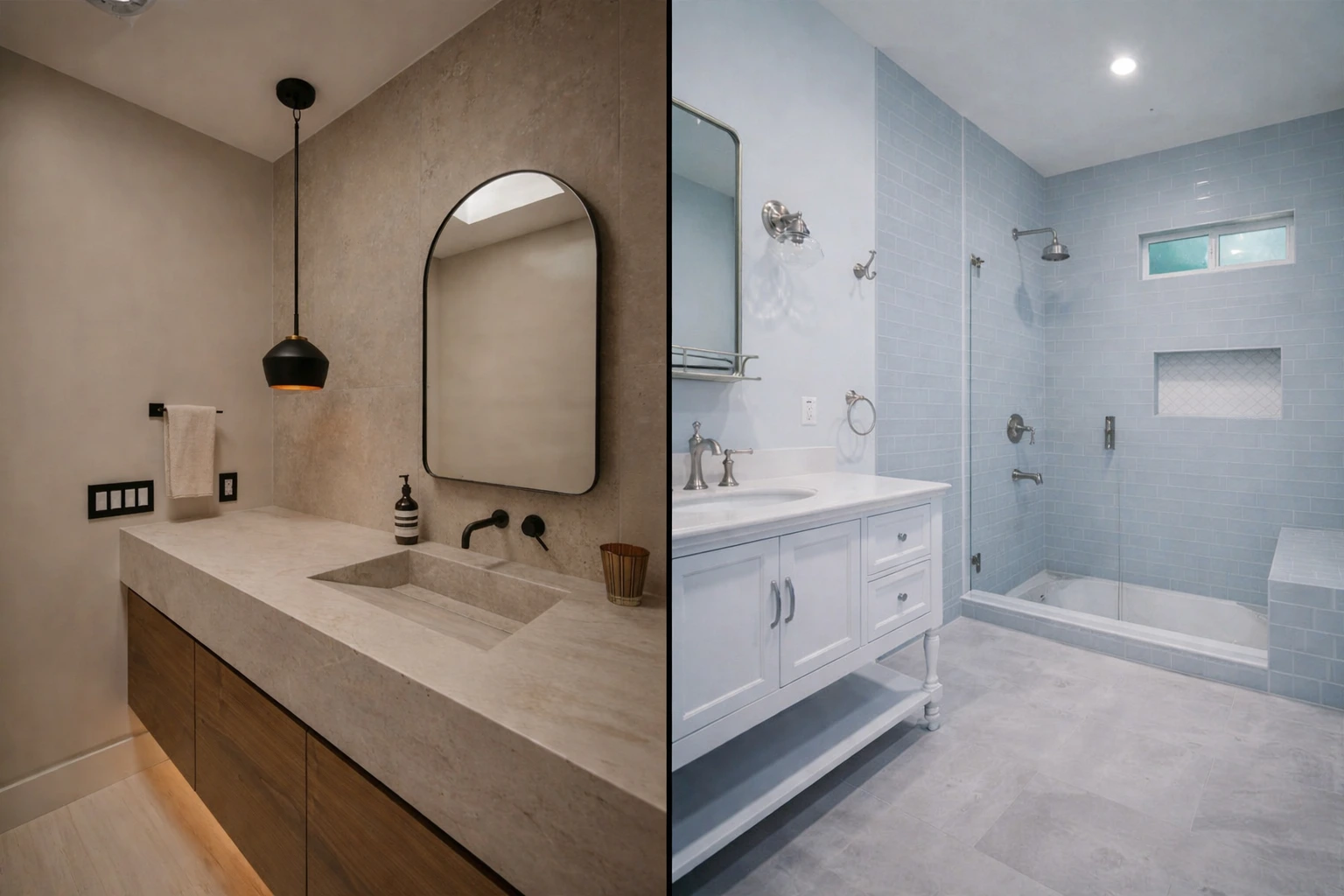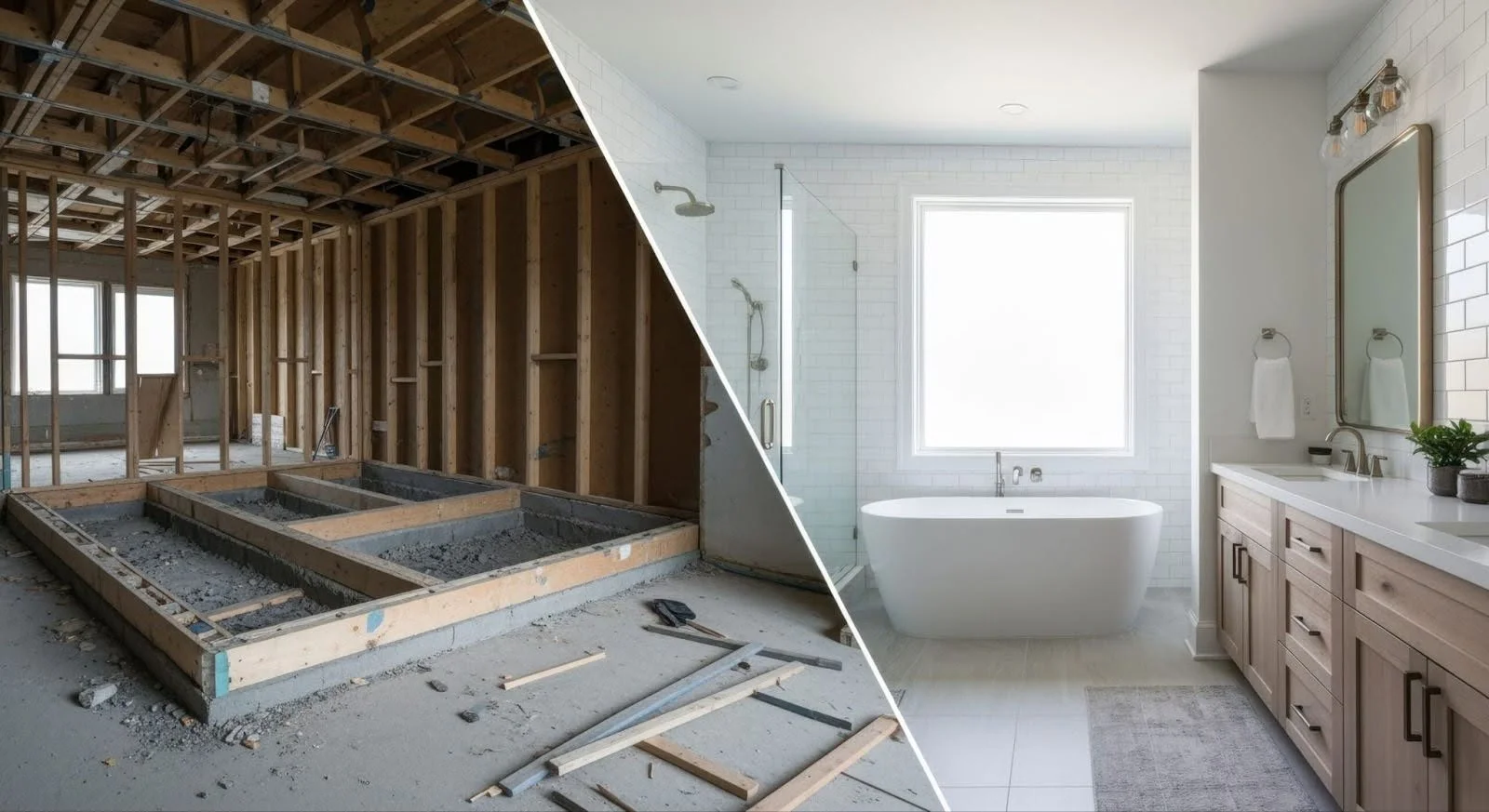

A bathtub and a walk-in shower compete for the same floor space. Fitting both comfortably generally needs 80 to 100 square feet, and a standard full bathroom runs closer to 40. The walk in shower vs bathtub decision comes down to which one earns that floor in your house.
American Home Improvement has remodeled bathrooms across Los Angeles and Ventura County for 25 years, and our licensed team (CA License #835537) handles home improvement in Woodland Hills. We’ve built both in single-bath bungalows in Van Nuys and in primary suites in Calabasas. Cost, layout, upkeep, resale, and who uses the room every day all pull on that call, and they don’t all pull in the same direction.
Walk In Shower vs Bathtub: What You Gain and Give Up
Five things decide which fixture belongs in your bathroom. Cost to install, floor space, maintenance, who can safely use it, and what it does at resale each pull the answer in a different direction, and none of them settles the question by itself.
Walk-in showers use a curbless or low-threshold entry with no tub wall to step over. They start at 36×36 inches, though 36×48 inches gives you room to move and is what our team recommends when the footprint allows it.
Bathtubs come in three common forms. Standard alcove tubs sit between three walls and carry the lowest price of the group. Freestanding soakers and drop-in models cost more and need open clearance on more than one side.
| Criteria | Walk-In Shower | Bathtub |
|---|---|---|
| Installation cost | $1,500-$25,000+ | $500-$10,000 |
| Space required | 32×32 in. code min., 36×36 recommended | 60×30 in. minimum |
| Maintenance | Reseal grout every 1 to 2 years | Replace caulk every few years |
| Cleaning effort | Grout lines and glass, wipe after use | One smooth surface, wipes down fast |
| Durability | Enclosure 50 years, tile 70+, glass door 20 | Cast iron 100 years, fiberglass 20 |
| Accessibility | Curbless entry, no step over | Step over a 14 to 20 in. wall |
| Best fit | Adults, aging in place, modern homes | Families with young children, single-bathroom homes |
What Goes Into the Price of a Walk-In Shower or Bathtub
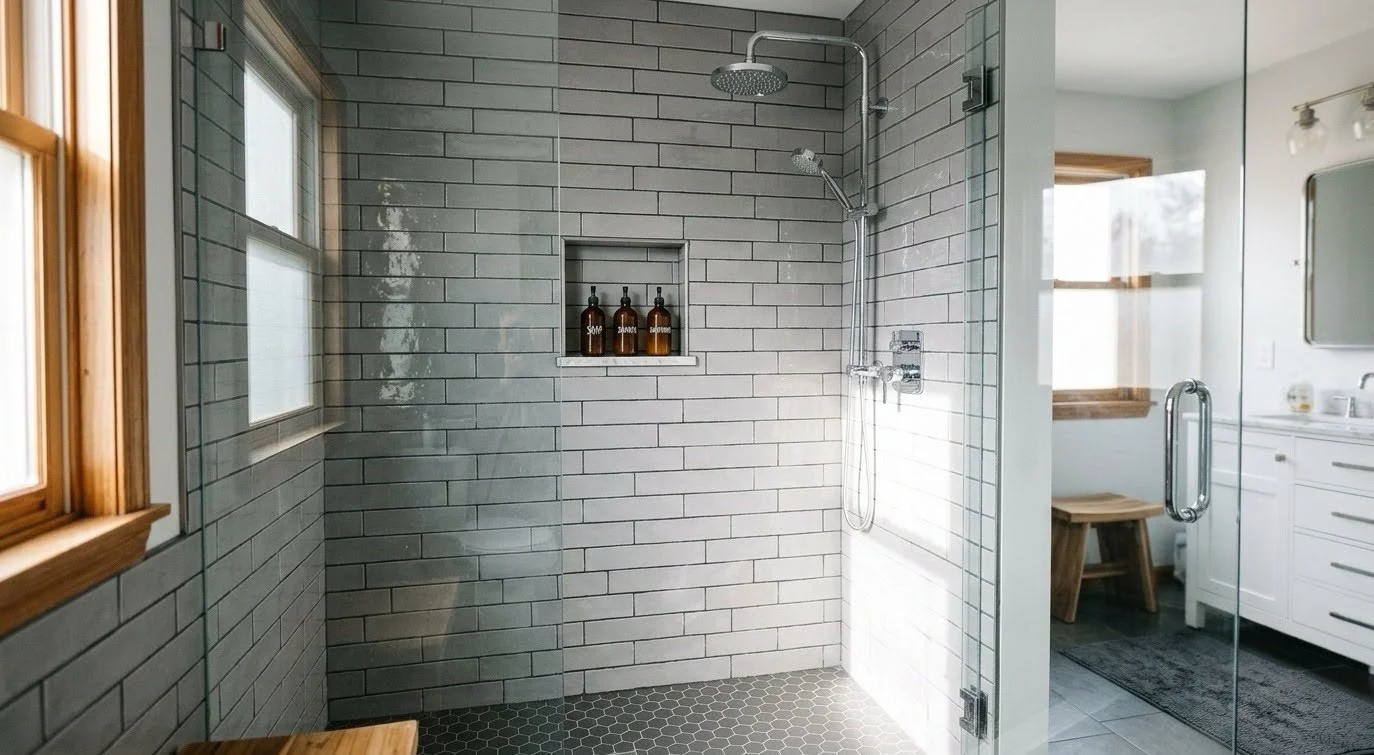
A walk-in shower runs from $1,500 to past $25,000 installed, and a bathtub from $500 to $10,000. The ranges overlap, so the fixture you choose affects the budget less than what you ask it to do.
On the shower side, the cost drivers are waterproofing, tile labor, custom glass, and fixture selection. Nationally, a walk-in shower runs $1,500 to past $25,000 installed and a bathtub $500 to $10,000. In Los Angeles, expect 20-30% above those figures once labor rates, permits, and demo are counted.
On the tub side, the type you pick does most of the work. A standard alcove tub installs for $500 to $5,000, including labor, while freestanding soakers and jetted models reach $8,000 to $10,000, which closes the gap with high-end shower builds quickly.
Demo, subfloor waterproofing, and plumbing reconfiguration are the lines that a quick estimate usually skips. They are also where a bathroom remodel cost breakdown separates a real number from a guess.
Which One Fits Your Bathroom Layout Better?
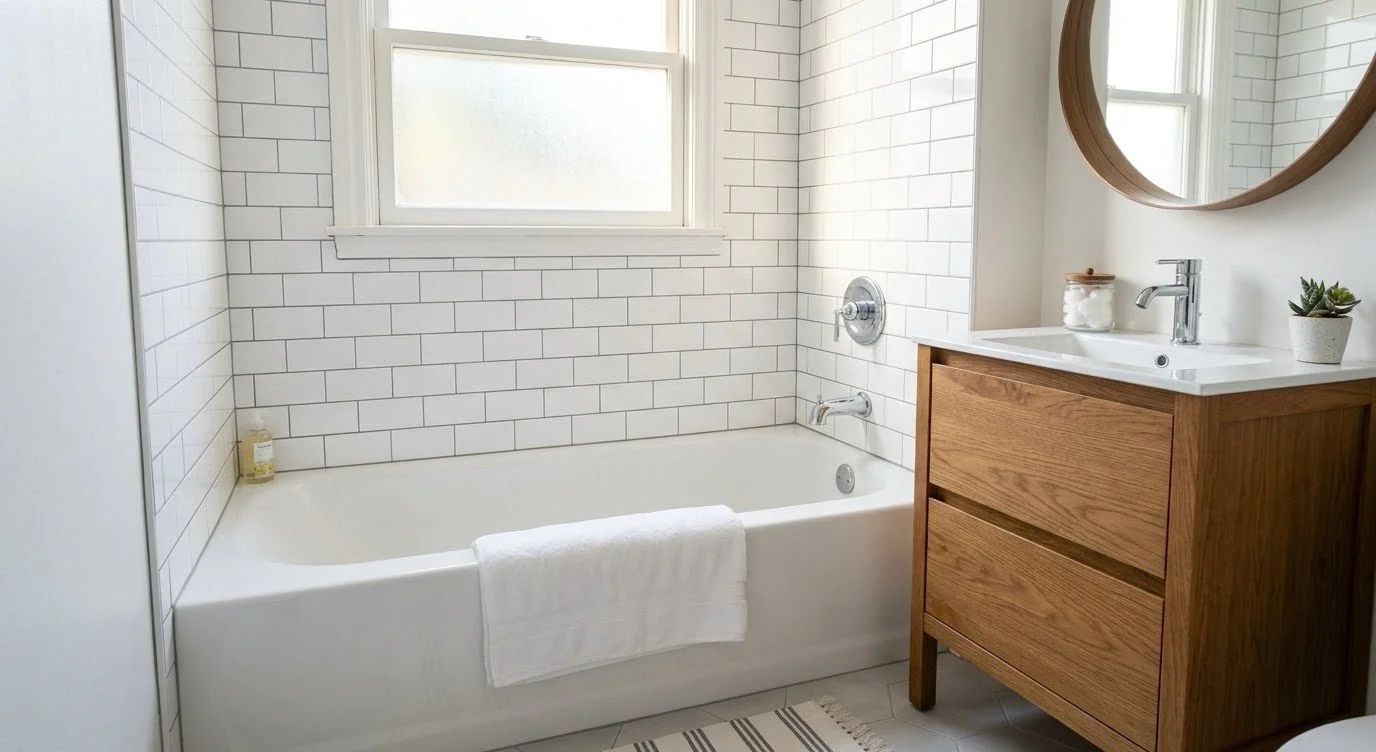
Floor space settles this question faster than budget does. A standard bathtub needs roughly 60×30 inches plus clearance on one side to get in and out. A walk-in shower can start at 36×36 inches, which frees up real floor area in a compact room.
In a small bathroom, pulling the tub out and building a curbless shower opens the room in a way no finish upgrade can match. Clear glass keeps sightlines running to the far wall, and removing the tub surround takes a bulky visual block out of the space. Corner units do the same job in tight San Fernando Valley floor plans by using a dead corner instead of a full wall.
The exception is a home with one bathroom. Taking out the only tub changes how the house functions day to day and narrows who will buy it later, and putting one back is a second full remodel rather than an adjustment. Refinishing a tub that chips or stains costs a fraction of replacing it, which is what keeps a single-bathroom home flexible for years.
Pros and Cons of a Walk-In Shower or Bathtub
Money and square footage are the easy part. What the choice does to your home’s value, what the room asks of you every week, and who can still use it safely as they age are harder to price. Those three pull in different directions, and the house decides which one wins.
Does Removing a Bathtub Hurt Your Resale Value?
The answer depends on who is likely to buy your house. A walk-in shower in the primary bath is a strong upgrade in a market of adult buyers and empty nesters, where nobody is shopping for somewhere to bathe a toddler.
Families with small children are looking for exactly that, so a listing with no tub at all is excluded from that pool of buyers. The risk was never the shower. Keeping a tub somewhere in the house protects your options, and it doesn’t have to be in the primary bath.
Is a Walk-In Shower or a Bathtub Easier to Clean?
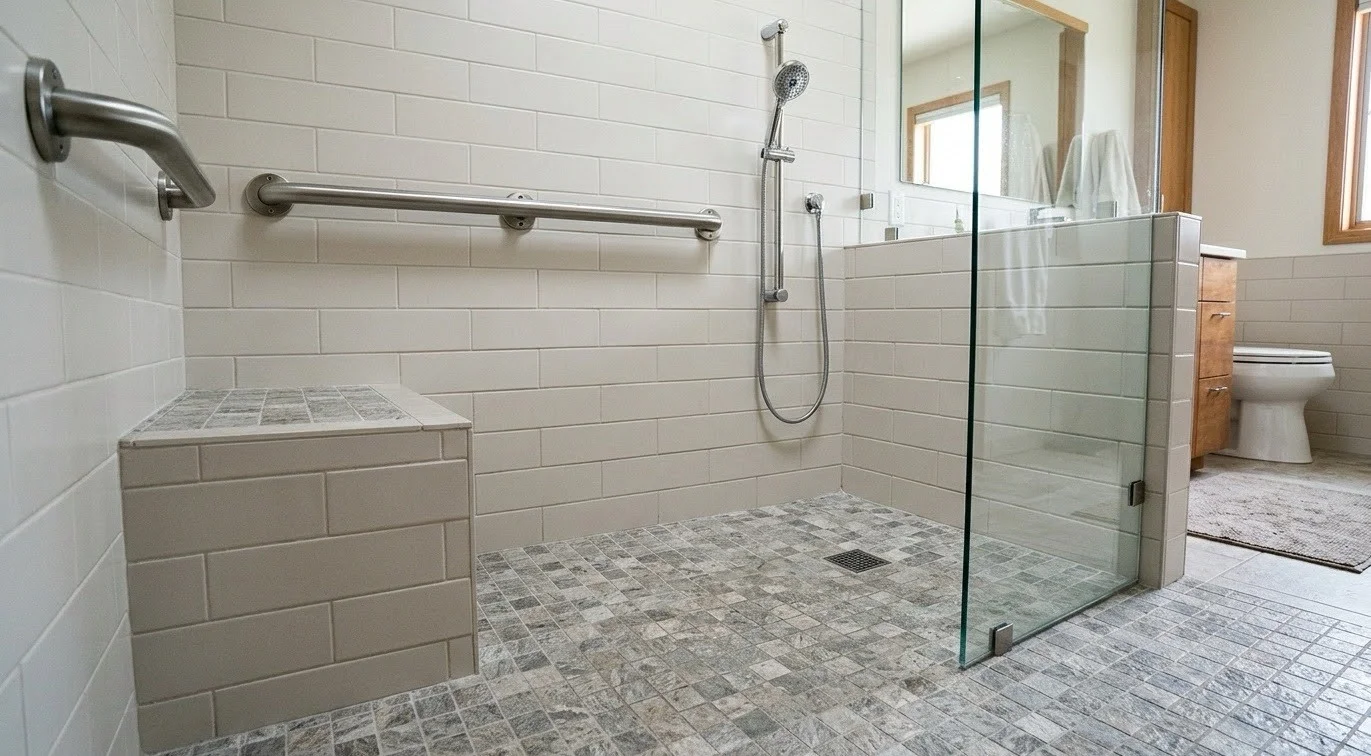
Tubs win on daily upkeep. One smooth surface wipes down in a few minutes, with no grout lines to scrub and no glass to keep spot-free.
Showers ask more of you week to week. Grout needs sealing every one to two years, and regular scrubbing to keep mildew from setting in, and frameless glass shows hard water spots unless it gets wiped after each use.
Neither one escapes the caulk, which needs replacing around the perimeter every few years either way. The only choice that genuinely cuts the workload is large-format tile, since fewer grout lines mean less to scrub, and our team plans it in early when upkeep matters to the homeowner.
Is a Walk-In Shower or a Bathtub Safer as You Age?
A curbless shower is the safer fixture, and the gap widens with every year in the house. There is no wall to step over; grab bars anchor into blocking installed during framing, and a bench can be built in from the start.
The risk it removes is well documented. Bathrooms send roughly 234,000 adults to emergency rooms a year, and 68 percent of those injuries happen in or around the tub or shower, with nearly 10 percent occurring while getting out of one, according to CDC data on adults aged 15 and older. Both injury and hospitalization rates climb with age.
It is also the fixture you will not be redoing. A shower enclosure runs about 50 years, and ceramic tile lasts 70 or more, according to the International Association of Certified Home Inspectors, so the walls you open now are the same ones you would have to open again later. Building the zero-threshold entry and the grab bar blocking today costs far less than retrofitting either one after a fall.
The Best Option Depends on Your Household
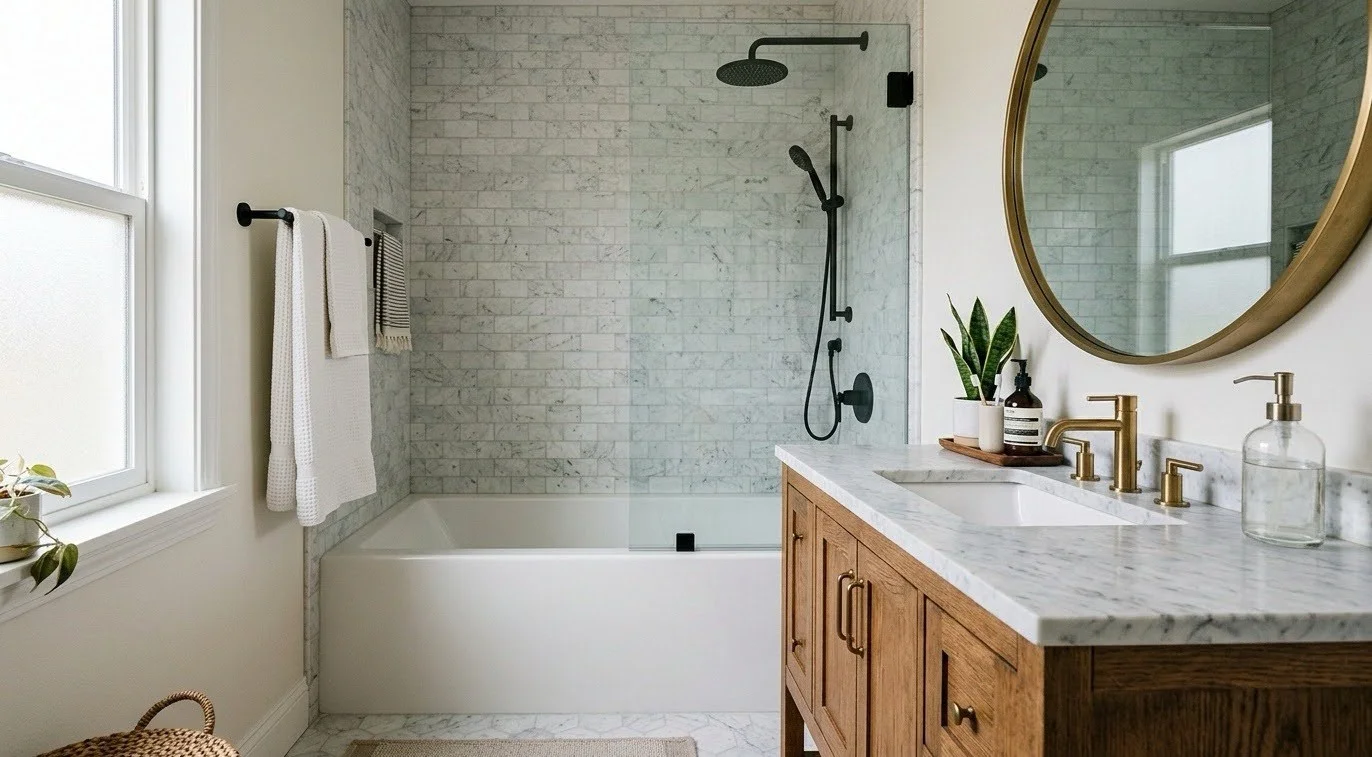
By now, the criteria are on the table, and not one of them has crowned a winner on its own. The right call comes from your household’s actual habits rather than from what is trending in bathroom design. Two short checklists turn all of it into a decision about your house.
Read both before you decide, since a house can tick boxes on each side. When that happens, the bathroom count breaks the tie. One bathroom means the tub stays, and with two or more, the primary bath is fair game as long as one tub survives somewhere in the house.
Choose a Walk-In Shower If This Sounds Like You
- Another bathroom in the house already has a tub
- Mobility is a factor now, or you are planning ahead for it
- The bathroom is small, and you want it to feel more open
- Your household showers daily, and the tub rarely gets used
- You want a modern, spa-like primary bath
- Your likely buyers are adults, retirees, or empty nesters
Choose a Bathtub If This Sounds Like You
- This is your only bathroom, and removing the tub would leave you with none
- You have young children, or plan to in the near future
- Someone uses the tub for relaxation, muscle recovery, or health reasons
- Your neighborhood sells mostly to families
- Your budget is tighter, and a standard alcove tub keeps costs manageable
Replacing a tub with a walk-in shower works in most bathrooms, though it is not automatic. The drain location has to support the new layout; the subfloor has to carry tile weight and waterproofing, and demo costs have to be in the quote rather than discovered later. Our team confirms all three during planning, since old pipes and soft subfloor are exactly the bathroom remodel mistakes that surface once demolition starts.
Neither option is wrong. The one that fits is the one that matches how your household actually lives.
Ready to Choose a Walk-In Shower or a Bathtub?
The bathrooms that still feel right in ten years are the ones designed around how the room actually gets used. Behind the tile, the waterproofing, the drain slope, and the permits are what separate a remodel that lasts from one that gets redone.
With 25 years across Los Angeles and Ventura County, our licensed team has built fixtures into bathrooms of every size. Get a free quote today and find out which one your bathroom can actually carry.
FAQs About Walk-In Showers or Bathtubs
Can You Have a Walk-In Shower and a Bathtub Together?
Yes, if the room has the floor area for it. Both fixtures generally need 80 to 100 square feet to sit side by side, against roughly 40 in a standard full bathroom, so anything smaller does better with a shower-tub combo.
Does a Walk-In Shower Need a Glass Door?
No. A doorless design works when the floor slope and showerhead placement keep water inside the wet zone, and a partial glass panel handles the rest.
How Long Does a Bathtub to Shower Conversion Take?
Five to ten days of on-site work for a full tile and enclosure build. The full timeline usually runs four to nine weeks once design decisions, material lead times, and scheduling are factored in.
Does a Walk-In Shower Use Less Water Than a Bathtub?
It depends on your showerhead and how long you stay in. A standard alcove tub takes roughly 30 to 40 gallons to fill for a bath. California caps showerheads at 1.8 gallons per minute under Title 20, below the 2.5 gpm federal limit, so any head sold here is 1.8 or lower.